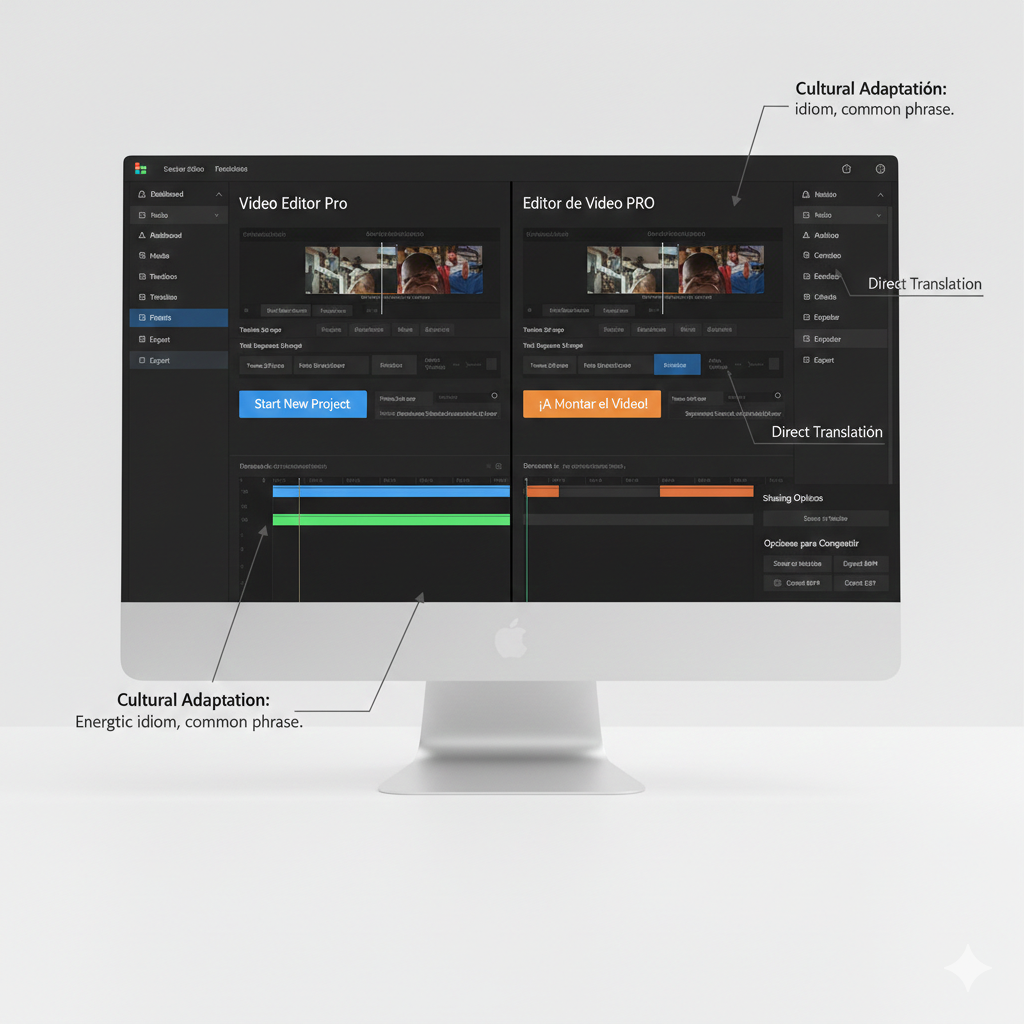

Your Brand Voice Doesn’t Stop at Translation
Most global companies invest heavily in their brand voice.
They define tone guidelines.
They create messaging frameworks.
They document values and positioning.
They align marketing, product, and customer success teams around a shared language.
Then they expand into new markets.
And somewhere between translation files, localization workflows, and product releases, something happens.
The voice disappears.
Not completely.
Just enough to create distance.
The website sounds one way.
The product sounds another.
Emails feel different again.
Support content introduces yet another tone.
Everything is technically correct.
Yet the brand no longer feels like itself.
And users notice.
Consistency Creates Trust
Trust isn’t built through a single interaction.
It’s built through repetition.
A consistent experience tells users:
“You know who we are.”
Every interaction reinforces the same impression.
The same personality.
The same values.
The same level of care.
But when brand voice changes from one touchpoint to another—or from one market to another—that trust becomes harder to establish.
Users may not consciously identify the problem.
They simply feel less connected.
Less confident.
Less certain.
And uncertainty is expensive.
The Problem Most Teams Don’t See
Many localization workflows focus on accuracy.
And accuracy matters.
But accuracy alone doesn’t create consistency.
Consider a product that positions itself in English as:
Friendly.
Supportive.
Human.
Now imagine its Spanish version sounds:
Formal.
Distant.
Corporate.
Nothing is technically wrong.
Yet everything feels different.
The product users experience is no longer the same product.
Brand Voice Is Part of Product Experience
Many organizations still view brand voice as a marketing concern.
In reality, it affects the entire user journey.
Users encounter language in:
- Landing pages
- Product interfaces
- Onboarding flows
- Email sequences
- Notifications
- Help centers
- Customer support
Every touchpoint contributes to how the product feels.
And feelings influence decisions.
People don’t simply buy features.
They buy confidence.
Trust.
Clarity.
Belonging.
Voice shapes all of those.
What Inconsistent Voice Looks Like in Practice
Let’s imagine a HealthTech platform.
The homepage says:
“We’re here to support your health journey.”
Warm.
Human.
Reassuring.
The onboarding flow says:
“User account initialization completed successfully.”
Technical.
Cold.
Transactional.
The support articles use legalistic language.
The emails sound overly enthusiastic.
The notifications feel robotic.
Users may never articulate the issue.
But collectively, these inconsistencies create friction.
The experience feels fragmented.
The Business Cost of Voice Inconsistency
Most companies track:
- Traffic
- Activation
- Retention
- Churn
Few track brand voice consistency.
Yet voice inconsistency often influences all of them.
Lower trust
Especially in sectors like HealthTech where credibility matters.
Reduced engagement
Users feel less connected to the product experience.
Slower onboarding
Language creates uncertainty instead of clarity.
Weaker brand recognition
The company becomes harder to remember.
More localization debt
Inconsistencies multiply over time and become harder to fix.
Why This Happens During Localization
Most often, nobody owns voice consistency.
Different teams work independently.
Marketing localizes campaigns.
Product teams localize interfaces.
Support teams localize documentation.
External vendors contribute.
Internal reviewers make changes.
Over time, every touchpoint evolves separately.
Without a shared voice framework, consistency becomes impossible.
Translation Quality Is Not the Same as Brand Voice Alignment
A localization review typically asks:
- Is the translation accurate?
- Is the terminology correct?
- Is the grammar acceptable?
Brand Voice Alignment asks different questions:
- Does this sound like the brand?
- Would users recognize the same personality here?
- Does this support trust?
- Does this create continuity across channels?
These questions often reveal issues that traditional QA processes miss.
Five Signs Your Brand Voice May Be Drifting Across Markets
1. Different teams describe your company differently
Ask marketing, product, and support teams to describe your brand in three words.
If the answers vary significantly, users probably experience that inconsistency too.
2. Your localized content feels more generic than your source content
This is one of the most common localization issues.
The meaning survives.
The personality doesn’t.
3. Customer feedback mentions tone or clarity
Comments like:
“The product feels confusing.”
“The emails don’t feel very personal.”
“The support articles sound different.”
can indicate voice fragmentation.
4. Multiple localization partners have contributed over time
Without clear voice governance, inconsistency becomes almost inevitable.
5. Nobody has reviewed the full user journey recently
Most reviews happen asset by asset.
Very few happen experience by experience.
How Brand Voice Alignment Creates Better Localization
Strong localization doesn’t simply preserve meaning.
It preserves identity.
The goal is not for every language to sound identical.
The goal is for every language to create the same feeling.
That requires:
Voice guidelines adapted for local markets
Not copied.
Adapted.
Cross-functional collaboration
Marketing.
Product.
Localization.
Customer Success.
Reviewing experiences, not just assets
Because users experience journeys, not isolated screens.
Ongoing governance
Voice consistency isn’t a one-time project.
It’s a system.
What I Look for During a Brand Voice Alignment Review
When reviewing multilingual products, I assess:
Voice consistency across touchpoints
Website.
Product.
Emails.
Support.
Alignment between source and target markets
Does the same personality survive localization?
UX impact
Does language support trust and usability?
Opportunities for improvement
Where can the experience become more coherent?
Because consistency isn’t about sounding perfect.
It’s about sounding recognizably you.
Language Is Part of the Product
A consistent brand voice doesn’t live in a style guide.
It lives in the experience users have every day.
Every screen.
Every email.
Every interaction.
When language works, products feel local.
When voice remains consistent, brands feel trustworthy.
And trust is one of the most valuable assets a company can scale across markets.
FAQ
What is Brand Voice Alignment?
Brand Voice Alignment ensures that a company’s personality, tone, and communication style remain consistent across languages, markets, and user touchpoints.
Why is brand voice important in localization?
Because users don’t only experience translated content, they experience a brand. Inconsistent voice can reduce trust, clarity, and engagement.
Can a translation be accurate but still damage brand perception?
Yes. A translation may preserve meaning while losing tone, personality, and emotional connection.
How often should companies review brand voice consistency?
Ideally during major product updates, market expansions, rebranding initiatives, or whenever multiple teams contribute to localized content.
Does Your Product Sound Like the Same Brand Everywhere?
Many localization issues aren’t linguistic.
They’re experiential.
If your website, product, emails, and support content feel disconnected across markets, it may be time for a Brand Voice Alignment Review.
👉 Does your product sound like the same company everywhere?
Let’s evaluate how your brand voice evolves across markets, channels, and customer touchpoints.