Localizing isn’t translating. It’s designing with words
When we think about localization, we usually imagine a technical process. But it’s really a linguistic design process. It’s about deciding what, how, and for whom something is said within a digital product.
And if the goal of your app or website is to guide, inform, sell, or move people… localization is a key part of UX.
What is UX localized with intention?
It’s an experience where:
- Everything sounds natural and familiar
- The language guides gently
- The structure is designed for the local user
- The words don’t just inform: they invite, orient, and accompany
Keys to an intuitive, persuasive UX
🤝 1. Think about the user before the text
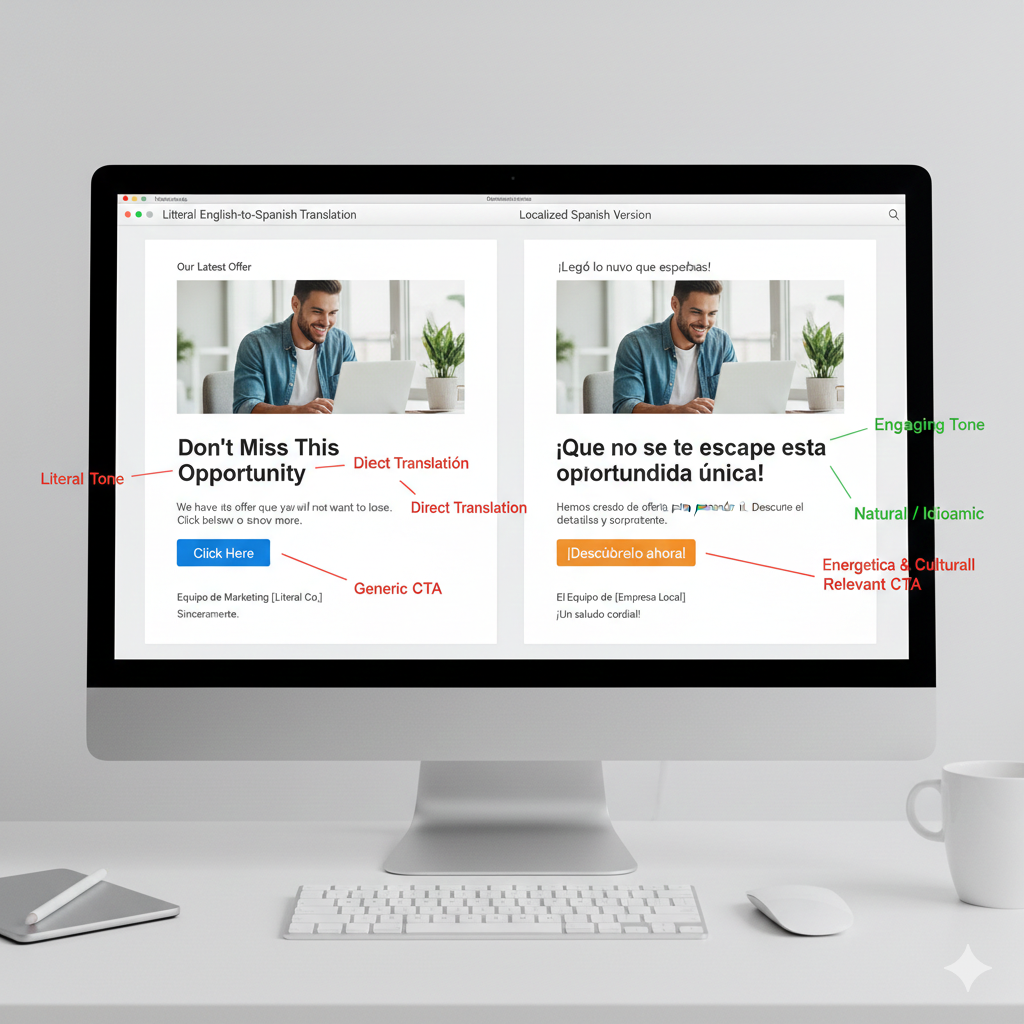
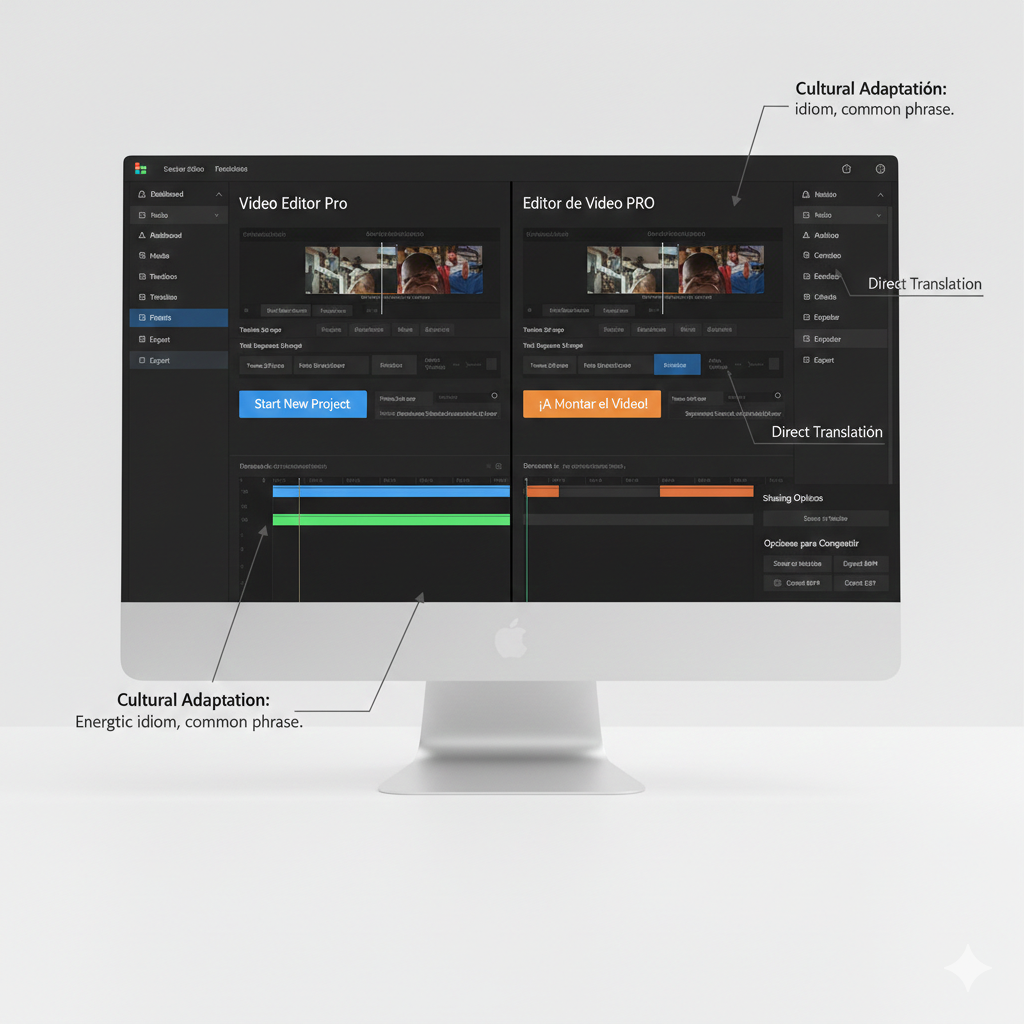
It’s not about “translating buttons.” It’s about understanding the user’s journey, their doubts, their cultural context… and adapting every touchpoint.
✍️ 2. Use microcopy with purpose, not filler
Small bits of text (placeholders, labels, tooltips) can help the most… or confuse the most. And they’re often translated in bulk, with no intention behind them.
✔️ Instead of “Save,” try “Save changes”
✔️ Instead of “Are you sure?”, try “Leave without saving?”
🎯 3. Align tone and action
If the product speaks warmly but the error message is cold or authoritative, something breaks.
Example:
❌ “Your request could not be completed”
✅ “Oops, something went wrong. Want to try again?”
🧱 4. Adapt structures without fear
Spanish often needs more space, and sometimes a different order. If the message isn’t clearly understood, it doesn’t matter that it’s “correctly translated.”
Why does this improve conversion?
Because a good user experience reduces friction, builds trust, and guides people toward action more effectively.
And careful localization is the bridge between visual design and verbal interaction. Between the click and the decision.
Who can help you with this?
A translator specialized in UX localization doesn’t just speak several languages: she thinks in flows, analyzes critical points, proposes adjustments, and improves the product’s overall experience.
That’s what I do as a linguist for SaaS and digital products: I review your copy, adapt it, and help every word work in your favor.
Would you like a UX review of your app or interface?
I offer a free mini audit where we analyze the key points of your product together, from a linguistic and functional perspective.