When translation isn’t enough
Most people think localizing just means translating with a few technical tweaks.
But the truth is different: good localization means designing an emotionally functional experience for another language and culture.
It’s a conversation between design, intention, and language. And if that dialogue breaks down, so does the user’s trust.
Mistake 1. Translating without context
A text string with no context is like trying to voice a character without knowing who they are.
❌ “Save” doesn’t mean the same thing if you’re accepting cookies, entering medical data, or saving a purchase.
Solution: Give the language team reference materials: screenshots, flows, user data, real examples. Good localization needs the big picture.
Mistake 2. Keeping the same tone across all languages
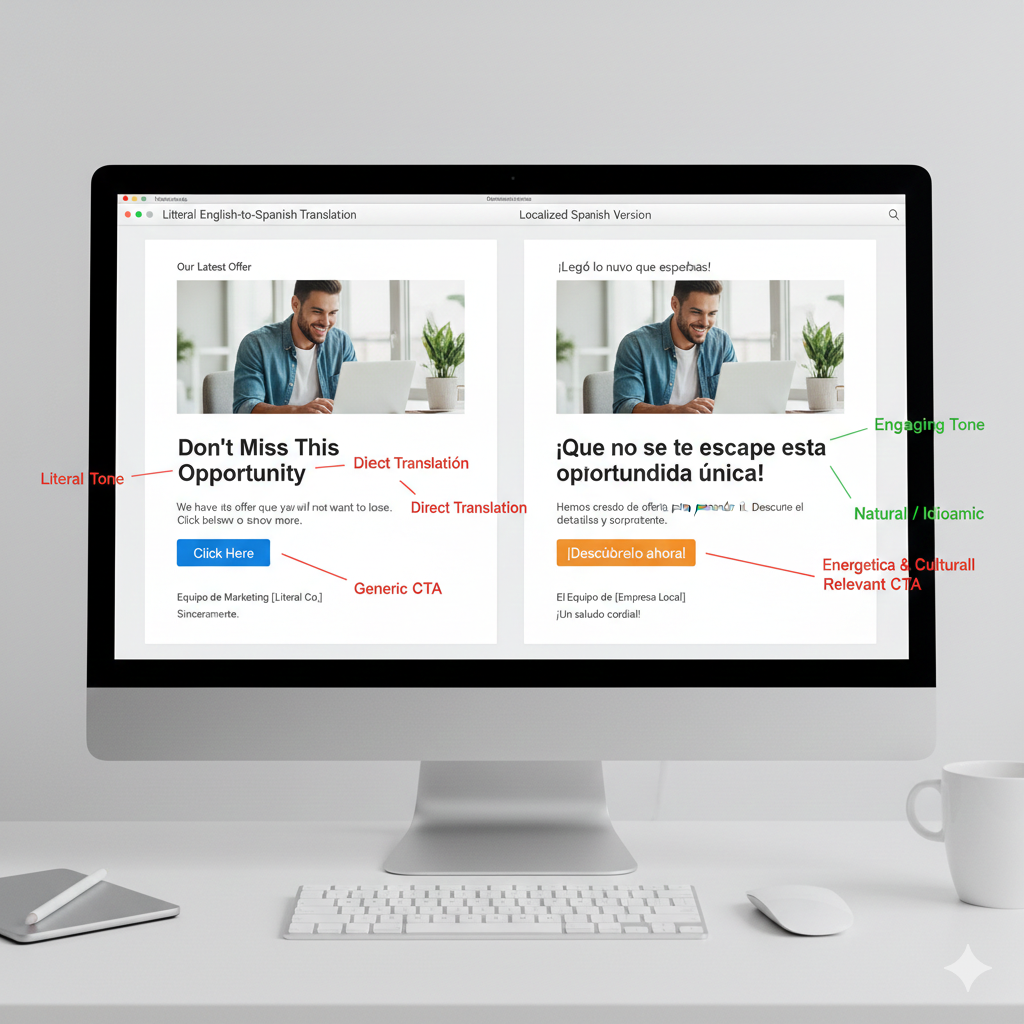
What sounds motivating in English can sound excessive or stiff in Spanish.
What feels warm there can come across as condescending here.
Solution: Define a specific tone guide per language and market. And make sure whoever localizes understands both your brand and the local audience.
💡 It’s not just about translating what you say, but how you sound.
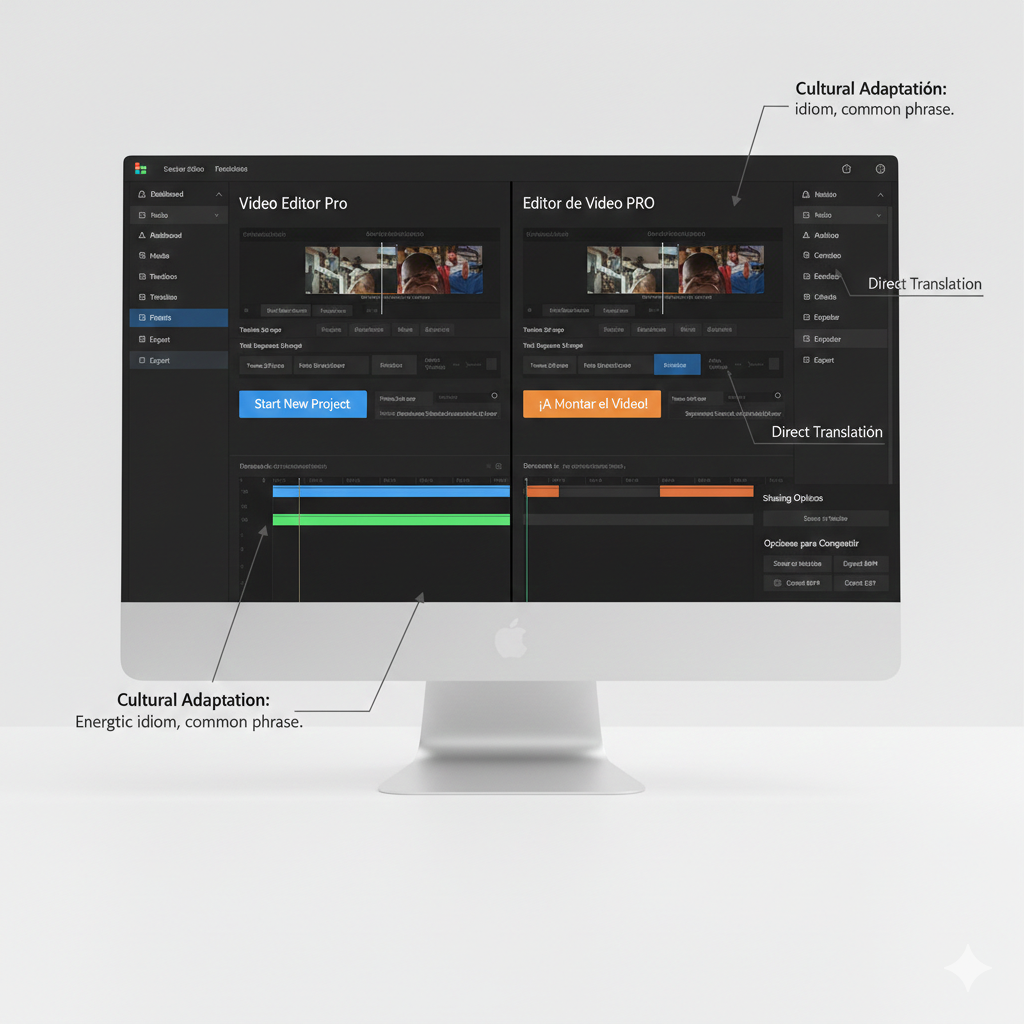
Mistake 3. Ignoring design constraints
Many teams believe “design comes first, text comes after.”
The opposite (and more realistic view) is that text and design shape each other.
Solution: Design with generous margins and flexible containers. Keep in mind Spanish can take up 20-30% more space than English. And adapt without fear.
Mistake 4. Not reviewing after implementation
Brilliant localization can be sabotaged by poor implementation.
Text out of place, broken labels, placeholders that don’t render…
Solution: Do a linguistic review on the actual, laid-out product. Words need visual context to breathe.
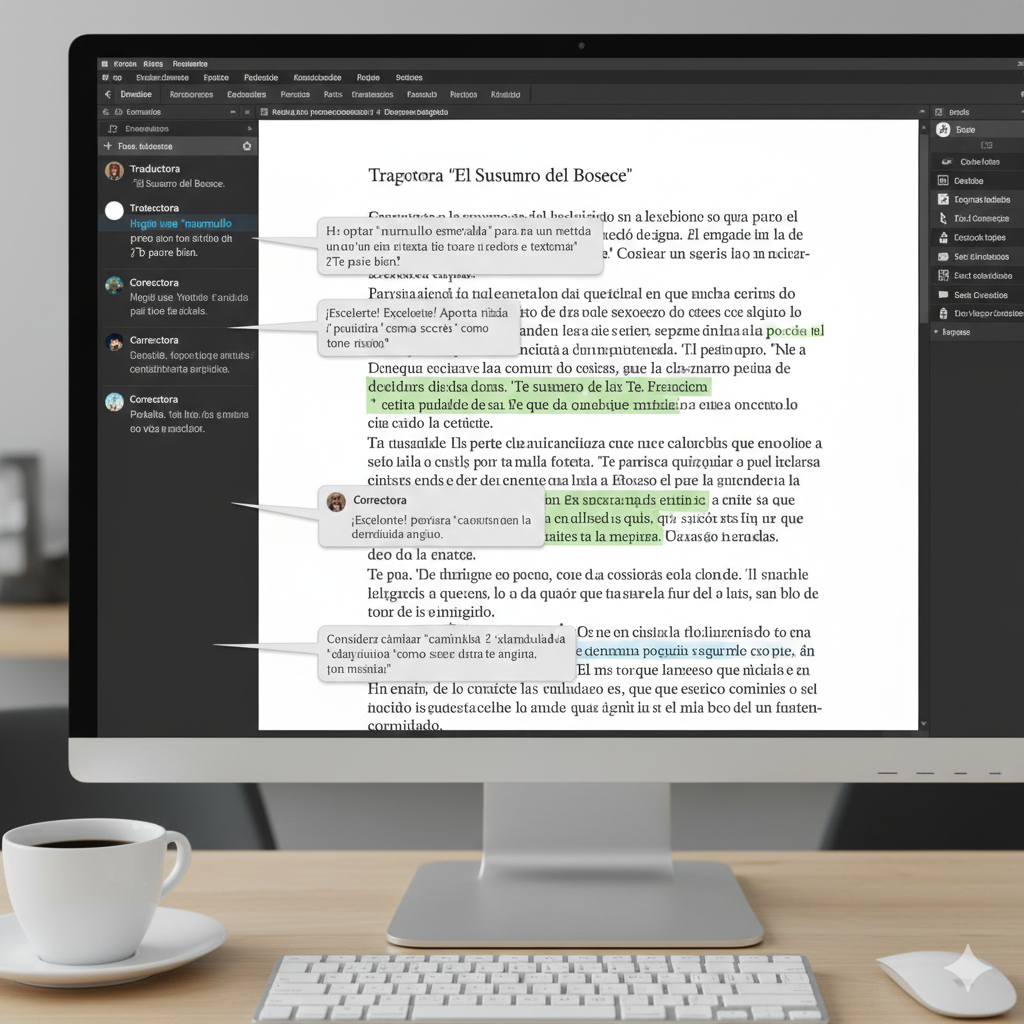
Mistake 5. Using machine translation without review
AI can help you move faster. But using it without review… can get expensive. And not just in conversions: in reputation too.
Solution: Automate wisely, but review with professionals. If your product has personality, nuance, or emotion, human review isn’t a luxury: it’s a necessity.
Avoid these mistakes with localization done with intention
Good localization goes unnoticed. Everything flows. The user feels the app is talking to them, not to some generic mass.
That’s the effect of localization done well: it doesn’t interrupt. It connects. It doesn’t impose. It accompanies.
Does your website or app need a professional review?
Request a free localization audit.
We’ll review a key segment of your product together, and I’ll tell you if it sounds natural, if it connects… and if it converts.