Editing isn’t rewriting. It’s fine-tuning.
“If the translation is already done, why does it need a style edit?”
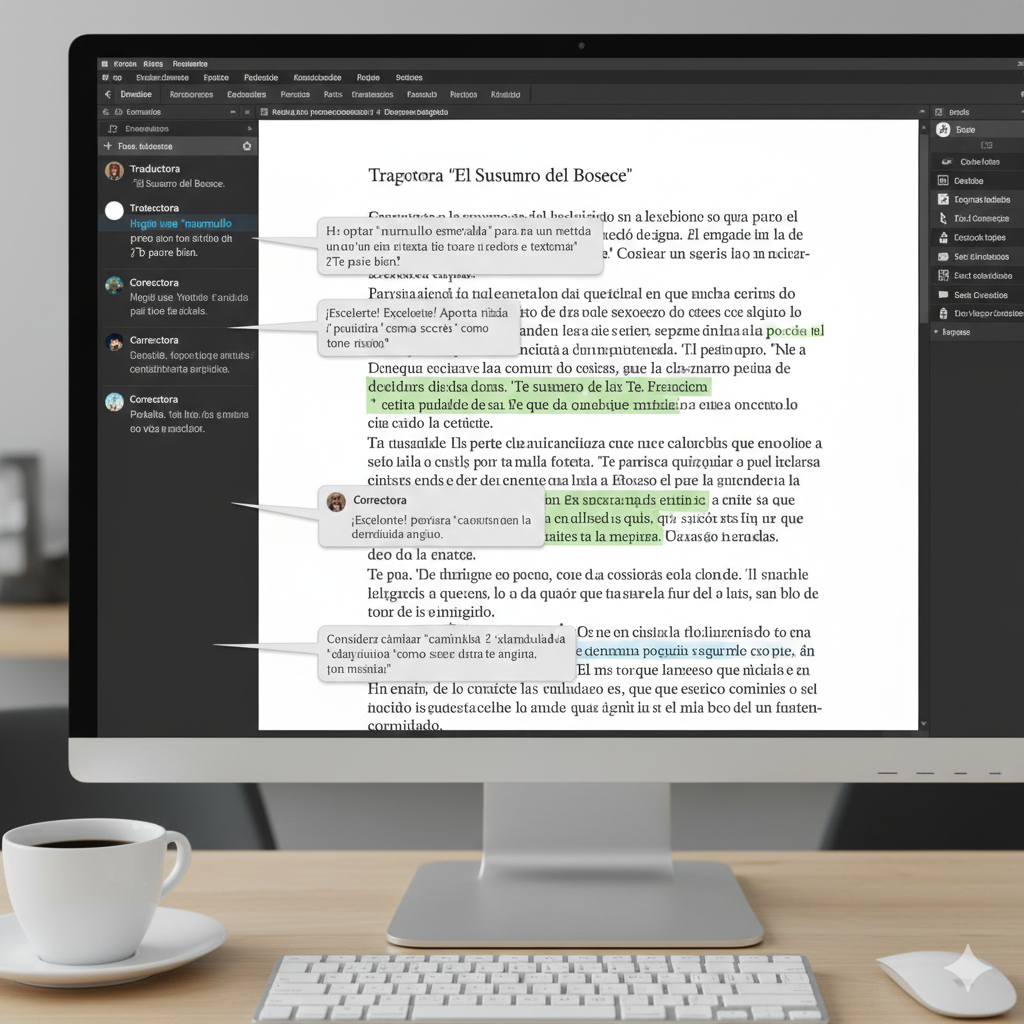
This question comes up a lot. But if you’ve worked with narrative or sensitive texts, you know a literary work isn’t finished once it’s translated. It gets fine-tuned. It gets listened to. It gets polished.
And that’s what a literary copyeditor does: she cares for what’s already there, so it sounds stronger, flows better, and rings truer.
What exactly does a literary copyeditor do
More than spotting errors, a literary copyeditor becomes the second voice that accompanies the text with respect and precision. Her tasks include:
- 💬 Reviewing narrative rhythm and the musicality of sentences
- ✍️ Removing repetitions or forced phrasing that strips away naturalness
- 🤝 Ensuring stylistic and temporal consistency (characters, tone, verb tenses)
- 🔍 Smoothing out calques from the original language that “sound like a translation”
- 🎭 Preserving narrative intention without overriding the author’s voice
It’s not about intervening for the sake of it, but knowing when a sentence needs air, a pause, or a pulse.
Why isn’t a good translation enough on its own?
Because form is content too.
In narrative, how something is told matters as much as what’s told. A story told poorly in its translated version can feel cold, clumsy, or foreign, even if it’s faithful to the original.
A style review ensures the text isn’t just correct, but emotionally coherent and literarily fluent.
That’s the difference between a published translation and an unforgettable read.
This is my approach as a literary copyeditor
I work by three principles that guide every review:
- Deep respect for the original author’s voice
- Active listening to the translation as delivered
- Minimal but meaningful intervention
I don’t edit to change. I edit to accompany. So the text keeps its identity and gains in fluency, without the reader feeling the seams of translation.
Which kinds of works need it most?
- 📚 Novels and literary short stories translated from English or German
- 👩👧 Personal testimonials, memoirs, or autofiction
- 👶 Children’s books, where every word counts
- 🧠 Narrative or non-fiction essays with an intimate tone
In all these cases, style isn’t decoration: it’s an essential part of the reading experience.
Do you have a translated work and want to make sure it flows?
I offer a free sample edit (up to 1 page) so you can see how a small adjustment can fine-tune the tone, clarity, and the reader’s experience.