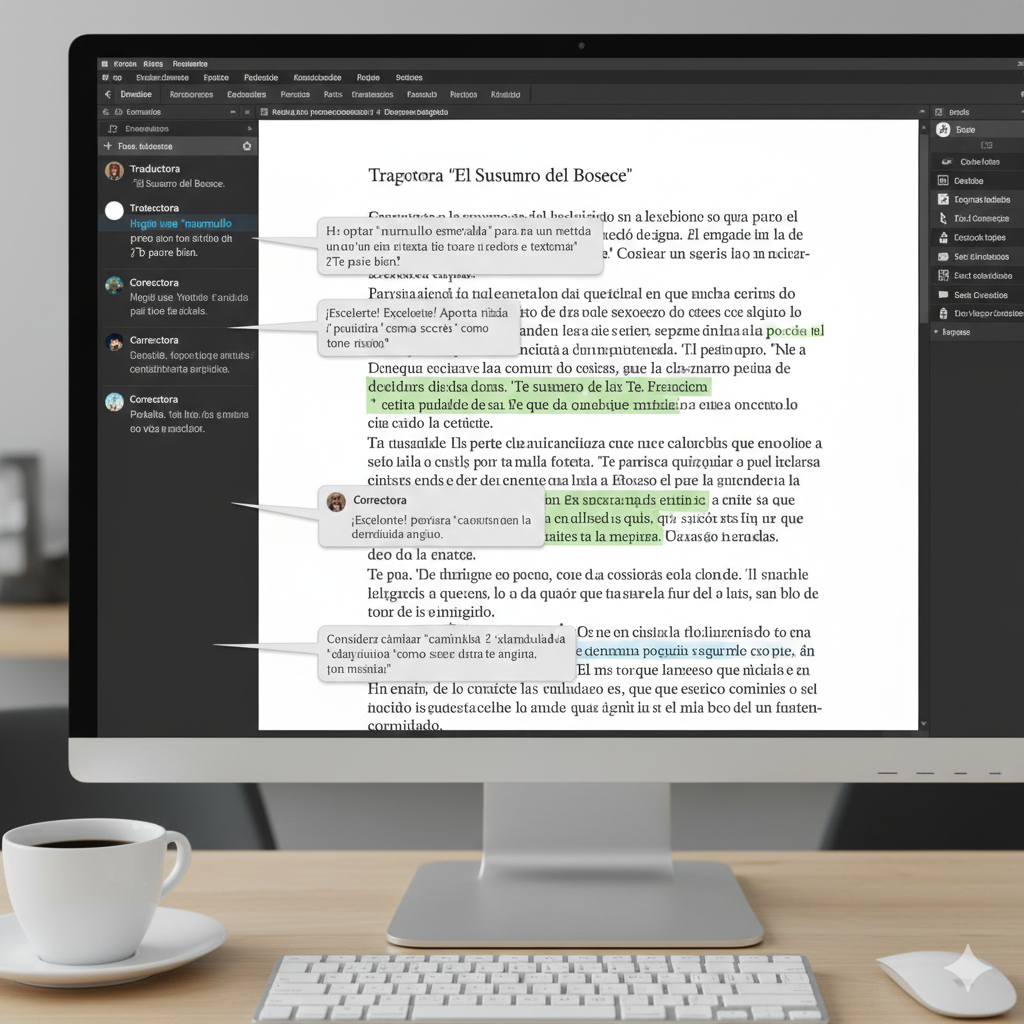

When the substance is right… but the form doesn’t hold up
Translating a literary work isn’t just carrying ideas from one language to another. It’s recreating an emotional, sonic, and aesthetic experience.
And sometimes, even when the content is well translated, the style falls short: the text feels clumsy, foreign, not quite fluent. Like an out-of-tune melody, even with the right sheet music.
Style isn’t decoration. It’s what makes the reader want to keep reading… or not.
1. Calques that sound forced
A very common mistake is carrying over structures from the original language as-is, without adapting them to Spanish’s own logic and musicality.
Example: “He made a pause for a moment” → better: “He paused for a moment”
Solution: Read it out loud and find more natural phrasing without losing the original’s intent.
2. Repetitions that wear the reader down
In some languages, repeating a word doesn’t sound off. In Spanish, it usually strips away elegance or rhythm. Sometimes it even adds unnecessary emotional weight.
Solution: Vary the vocabulary, use synonyms with intention, and split sentences when the rhythm calls for it.
3. Unintentional tone shifts
A translation can unintentionally mix registers: it starts literary and turns too colloquial, or the other way around.
Solution: Keep the tone consistent throughout the whole work. And if it shifts, make sure it’s intentional, not the result of inattention.
4. Lack of rhythmic flow
Rhythm in narrative matters as much as content. Sentences that run too long, incorrect punctuation, or rigid structures break the text’s cadence.
Solution: Listen to the music of the text. Cut or connect sentences according to what the scene, the character, or the emotion calls for.
5. “Correct” translations that lack life
Some texts sound like someone did the job correctly… but without soul.
Because translating narrative isn’t just about getting it right. It’s about creating a reading experience that breathes in Spanish.
Solution: Reread with an editor’s eyes. Make adjustments that don’t change the content, but do change the impact.
How can a review help you avoid these mistakes?
A specialized style review can make all the difference. It’s not about “fixing errors,” but about fine-tuning what already works so that every page has its own voice.
As a literary copyeditor, I work to make sure every translated text keeps its identity… and gains in naturalness, rhythm, and presence.
Do you have a literary translation into Spanish and you’re not sure it fully flows?
I offer a free sample review (up to 1 page) to spot these subtle style issues that could be weakening your text.