Much more than translating: the art of adapting
When a tech company enters new markets, it usually thinks about translating its website, app, or onboarding sequences. But web localization goes far beyond that: it’s not just about changing words, it’s about adapting experiences.
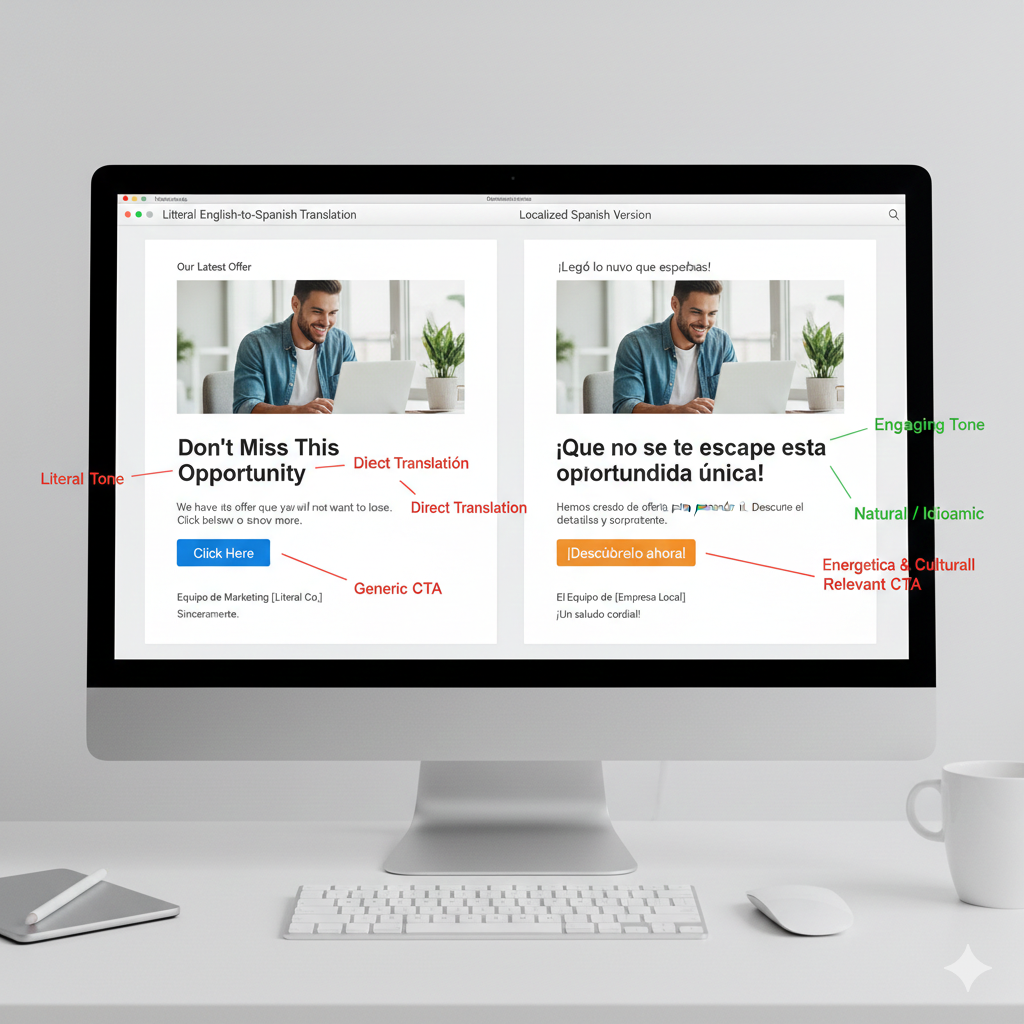
Imagine landing on a nutrition app. Everything’s in Spanish… but it sounds off. The button says “Empiece ahora,” the welcome email starts with “Hola, usuario,” and the tips read like literal translations. It doesn’t build trust. You disconnect. And you probably… leave.
That’s the difference between translating and localizing. An experience stops being useful the moment it doesn’t feel designed for you.
What does localizing a SaaS website into Spanish involve?
Localizing is like having a suit tailor-made: every word, every button, every phrase is fitted to the user’s cultural shape. And when something fits, it shows… even if you can’t quite see how.
This includes:
- 💬 Adapting the language: literal translation isn’t enough. Tone, set phrases, units of measurement, dates, formats, etc. need adjusting.
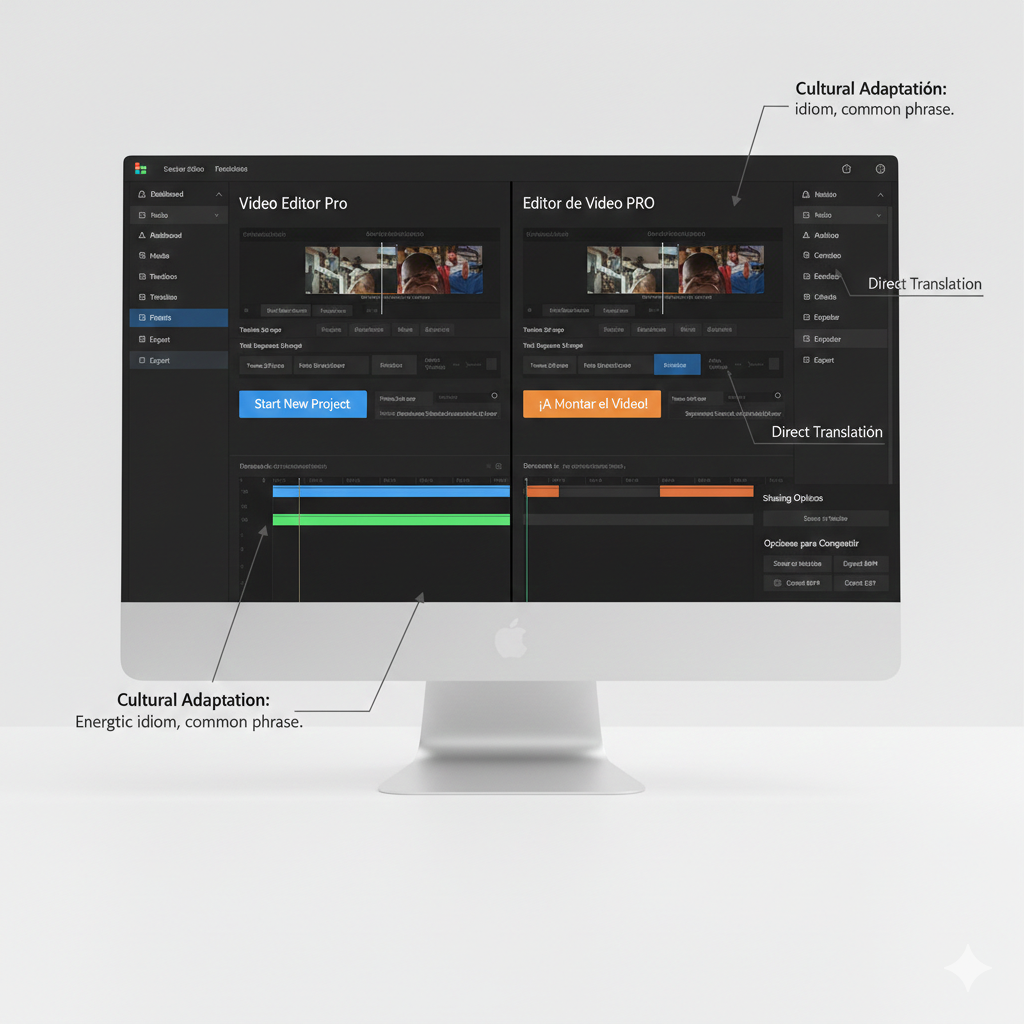
- 🤝 Reviewing linguistic UX: buttons, menus, instructions, placeholders… Everything communicates. And everything can confuse if it isn’t adapted naturally.
- 🎯 Rewriting calls to action: so they connect emotionally and functionally with the Spanish-speaking audience.
- 🌍 Accounting for segmentation: because Spanish from Spain isn’t the same as Latin American Spanish. Each market needs its own nuances.
Does your website sound like what your users expect… or like a literal translation?
Why does your SaaS need this localization?
Because without it, you can lose opportunities before your potential customer even reads you:
- 🤝 A poorly localized CTA can make visitors leave your site.
- 💬 An app that sounds “off” doesn’t build trust.
- 🔍 An error on a key screen can ruin the whole onboarding.
And worse: without quality localization, your brand can come across as unprofessional or disconnected from the audience you’re trying to reach.
✅ Are you using locally natural set phrases?
✅ Are your buttons clear and actionable in Spanish?
✅ Is the tone consistent with your brand and the market?
What makes the difference
Good localization goes unnoticed. Everything flows. The user feels understood. The interface speaks their language — not just in vocabulary, but in rhythm, tone, and context.
That’s what I do as a SaaS localization specialist: help you create text that works in Spanish as if it had been written from the inside, with both technical and narrative sensitivity.
Real-world impact
Companies like YAZIO, Navan, and GoStudent have already trusted this approach to improve their connection with the Spanish-speaking market and boost conversion after adapting interfaces, emails, and digital content with intention.
Want to check if your SaaS website is properly localized?
I offer a free 15-minute linguistic audit to review whether your website is ready to grow in the Spanish market.
Suggested internal links
✅ Curious facts about the work of technical translators
✅ Divide and conquer